Posts

Taraxacum officinale
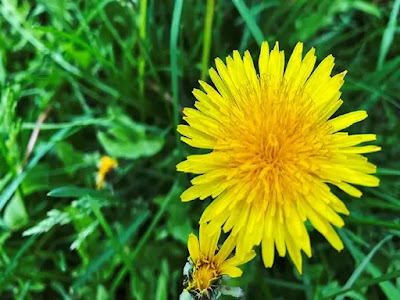
Image
  # 10 Dandelion Kingdom: Plantae Clade: Tracheophytes Clade: Angiosperms Clade: Eudicots Clade: Asterids Order: Asterales Family: Asteraceae Genus: Taraxacum Species: Taraxacum officinale Scientific name: Taraxacum officinale Common names: Dandelion, blowball, lion's tooth, puffball, priest's crown, wild endive Habit: Dandelion is a perennial herbaceous plant that grows low to the ground. It can reach up to 30 cm in height and has a basal rosette of deeply toothed leaves. Root: Dandelion has a taproot that can grow up to 30 cm deep. It is fleshy, and white, and can be used in herbal medicine. Stem: Dandelion stems are hollow and leafless, and they can produce a milky sap when broken. Leaf: Dandelion leaves are basal and form a rosette. They are deeply lobed with toothed margins and can grow up to 30 cm in length. Flower: Dandelion flowers are bright yellow and composed of many small ray florets. They are borne singly on long, hollow stalks and can reach up to 4 cm in di...

Polyscias fruticosa aurea

Image
  # 09 Arilia Golden Plant Kingdom: Plantae Clade: Tracheophytes Clade: Angiosperms Clade: Eudicots Order: Apiales Family: Araliaceae Genus: Polyscias Species: P. fruticosa Scientific Name: Polyscias fruticosa aurea Common Names: Ming Aralia, Parsley Aralia, Golden Polyscias Habit: Polyscias fruticosa aurea is a small tree or shrub with a compact, bushy habit, and it can grow up to 6-8 feet tall indoors. Root: The root system of Polyscias fruticosa aurea is fibrous. Stem: The stem is woody, branched, and covered with greenish-brown bark. Leaf: The leaves of Polyscias fruticosa aurea are compound, glossy, and variegated with yellow or golden color. The leaflets are oval, pointed, and arranged in a pinnate pattern. The leaves are 3-4 inches long and 1-2 inches wide. Flower: Hermaphrodite (having both male and female reproductive organs) Calyx: Five sepals, fused at the base Corolla: Five petals, fused to form a tube Androecium: Five stamens, fused to the corolla tube Gynoecium: ...

Bidens pilosa

Image
  # 08 Black Jack  Kingdom: Plantae Clade: Tracheophytes Clade: Angiosperms Clade: Eudicots Clade: Asterids Order: Asterales Family: Asteraceae Genus: Bidens Species: B. pilosa Scientific name: Bidens pilosa Common names: Bidens, Black-jack, Bur marigold, Cobbler's pegs, Spanish needle, etc. Habit: Bidens pilosa is an annual herb that can grow up to 1.5 meters tall. It is known for its sharp, needle-like seeds that can stick to clothing and animal fur. Root: Bidens pilosa has a fibrous root system that is shallow and spreading. Stem: The stem of Bidens pilosa is green, ridged, and can be either erect or sprawling depending on the growing conditions. Leaf: The leaves of Bidens pilosa are opposite, pinnately compound, and can be up to 12 cm long. They are dark green and have serrated margins. Flower: The flowers of Bidens pilosa are small and yellow. They are arranged in solitary heads, with each head having 5-10 ray flowers and numerous disk flowers. Calyx: The calyx of Bid...

Brassica juncea

Image
  # 07  Mustard Kingdom: Plantae Clade: Tracheophytes Clade: Angiosperms Clade: Eudicots Clade: Rosids Order: Brassicales Family: Brassicaceae Genus: Brassica Species: B. juncea Scientific Name: Brassica juncea Common Names: Mustard, Brown Mustard, Indian Mustard, Chinese Mustard Habit: Mustard is an annual or biennial herb that can grow up to 1-2 meters in height. It has a branching, erect stem that is usually hairless or sparsely hairy. Root: Mustard has a fibrous root system that can grow up to 60-90 cm deep in well-drained soil. The roots are usually shallow in compacted soil and can be easily pulled out. Stem: The stem of mustard is round, smooth, and usually green or purplish in color. It is often branched and can become woody at the base with age. Leaf: The leaves of mustard are alternate, petiolate, and can be deeply lobed or simple, depending on the variety. They are usually dark green in color, but can have a bluish-gray tint. The leaves have a pungent, spicy aroma...

Gerbera jamesonii.

Image
  # 06 Transvaal Daisy  Kingdom: Plantae Clade: Tracheophytes Clade: Angiosperms Clade: Eudicots Clade: Asterids Order: Asterales Family: Asteraceae Subfamily: Cichorioideae Tribe: Mutisieae Genus: Gerbera Species: G. jamesonii Scientific Name: Gerbera jamesonii.  Common Name:  Barberton Daisy, African Daisy, and Transvaal Daisy. Habit: Gerbera jamesonii is a perennial herbaceous plant that grows up to 45 cm tall. Root: The root system of Gerbera jamesonii is a fibrous root system that grows close to the surface of the soil. Stem: The stem of Gerbera jamesonii is erect, hairy, and green. It bears a few leaves and flowers. Leaf: The leaves of Gerbera jamesonii are basal, simple, and arranged in a rosette. They are oval to elliptic in shape, dark green, and hairy on both sides. The leaves have a long petiole and a wavy margin. Flower: The flowers of Gerbera jamesonii are large, showy, and daisy-like, measuring around 7-12 cm in diameter. They are borne singly on lon...

Allamanda blanchetii

Image
  # 05 Purple Almanda Kingdom: Plantae Clade: Tracheophytes Clade: Angiosperms Clade: Eudicots Clade: Asterids Order: Gentianales Family: Apocynaceae Subfamily: Apocynoideae Tribe: Plumerieae Genus: Allamanda Species: A. blanchetii Scientific name: Allamanda blanchetii Common names: Purple Allamanda, Purple Allamanda Bush Habit: Allamanda blanchetii is a perennial flowering shrub that grows up to 2-3 meters in height. It has a woody stem and a sprawling growth habit, with a dense and bushy appearance. Root: The root system of Allamanda blanchetii is fibrous and extensive, providing a strong anchor for the plant in the soil and aiding in water and nutrient uptake. Stem: The stems of Allamanda blanchetii are woody and slightly woody, and are typically green or brown in color. The plant produces multiple stems that grow in a sprawling, bushy fashion. Leaf: The leaves of Allamanda blanchetii are simple, ovate, and opposite, measuring approximately 10-15 cm in length. They are da...

Spathiphyllum spp.

Image
  # 04 Peace Lily  Kingdom: Plantae Clade: Tracheophytes Clade: Angiosperms Clade: Monocots Order: Alismatales Family: Araceae Subfamily: Monsteroideae Tribe: Spathiphylleae Genus: Spathiphyllum Scientific name: Spathiphyllum spp. Common names: Spathiphyllum is commonly known as peace lily or spathe flower. Habit: Spathiphyllum is a herbaceous perennial plant that can grow up to 1 meter in height. It has an upright habit with long, dark green leaves that grow from a central point. The leaves are oblong or lanceolate in shape and have a pointed tip. The plant produces white or greenish-white flowers that are surrounded by a white or green spathe. Root: The roots of Spathiphyllum are fibrous and grow shallowly in the soil. They do not require a deep pot or planting depth, but the soil should be kept consistently moist. Stem: Spathiphyllum has a short stem that is hidden by the foliage. The stem is usually not visible unless the plant is propagated through division. L...