Posts

Showing posts with the label Plants

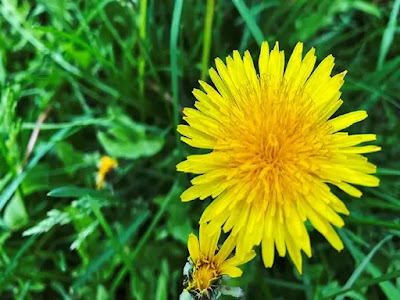
Taraxacum officinale
Image
  # 10 Dandelion Kingdom: Plantae Clade: Tracheophytes Clade: Angiosperms Clade: Eudicots Clade: Asterids Order: Asterales Family: Asteraceae Genus: Taraxacum Species: Taraxacum officinale Scientific name: Taraxacum officinale Common names: Dandelion, blowball, lion's tooth, puffball, priest's crown, wild endive Habit: Dandelion is a perennial herbaceous plant that grows low to the ground. It can reach up to 30 cm in height and has a basal rosette of deeply toothed leaves. Root: Dandelion has a taproot that can grow up to 30 cm deep. It is fleshy, and white, and can be used in herbal medicine. Stem: Dandelion stems are hollow and leafless, and they can produce a milky sap when broken. Leaf: Dandelion leaves are basal and form a rosette. They are deeply lobed with toothed margins and can grow up to 30 cm in length. Flower: Dandelion flowers are bright yellow and composed of many small ray florets. They are borne singly on long, hollow stalks and can reach up to 4 cm in di...

Polyscias fruticosa aurea

Image
  # 09 Arilia Golden Plant Kingdom: Plantae Clade: Tracheophytes Clade: Angiosperms Clade: Eudicots Order: Apiales Family: Araliaceae Genus: Polyscias Species: P. fruticosa Scientific Name: Polyscias fruticosa aurea Common Names: Ming Aralia, Parsley Aralia, Golden Polyscias Habit: Polyscias fruticosa aurea is a small tree or shrub with a compact, bushy habit, and it can grow up to 6-8 feet tall indoors. Root: The root system of Polyscias fruticosa aurea is fibrous. Stem: The stem is woody, branched, and covered with greenish-brown bark. Leaf: The leaves of Polyscias fruticosa aurea are compound, glossy, and variegated with yellow or golden color. The leaflets are oval, pointed, and arranged in a pinnate pattern. The leaves are 3-4 inches long and 1-2 inches wide. Flower: Hermaphrodite (having both male and female reproductive organs) Calyx: Five sepals, fused at the base Corolla: Five petals, fused to form a tube Androecium: Five stamens, fused to the corolla tube Gynoecium: ...

Bidens pilosa

Image
  # 08 Black Jack  Kingdom: Plantae Clade: Tracheophytes Clade: Angiosperms Clade: Eudicots Clade: Asterids Order: Asterales Family: Asteraceae Genus: Bidens Species: B. pilosa Scientific name: Bidens pilosa Common names: Bidens, Black-jack, Bur marigold, Cobbler's pegs, Spanish needle, etc. Habit: Bidens pilosa is an annual herb that can grow up to 1.5 meters tall. It is known for its sharp, needle-like seeds that can stick to clothing and animal fur. Root: Bidens pilosa has a fibrous root system that is shallow and spreading. Stem: The stem of Bidens pilosa is green, ridged, and can be either erect or sprawling depending on the growing conditions. Leaf: The leaves of Bidens pilosa are opposite, pinnately compound, and can be up to 12 cm long. They are dark green and have serrated margins. Flower: The flowers of Bidens pilosa are small and yellow. They are arranged in solitary heads, with each head having 5-10 ray flowers and numerous disk flowers. Calyx: The calyx of Bid...

Brassica juncea

Image
  # 07  Mustard Kingdom: Plantae Clade: Tracheophytes Clade: Angiosperms Clade: Eudicots Clade: Rosids Order: Brassicales Family: Brassicaceae Genus: Brassica Species: B. juncea Scientific Name: Brassica juncea Common Names: Mustard, Brown Mustard, Indian Mustard, Chinese Mustard Habit: Mustard is an annual or biennial herb that can grow up to 1-2 meters in height. It has a branching, erect stem that is usually hairless or sparsely hairy. Root: Mustard has a fibrous root system that can grow up to 60-90 cm deep in well-drained soil. The roots are usually shallow in compacted soil and can be easily pulled out. Stem: The stem of mustard is round, smooth, and usually green or purplish in color. It is often branched and can become woody at the base with age. Leaf: The leaves of mustard are alternate, petiolate, and can be deeply lobed or simple, depending on the variety. They are usually dark green in color, but can have a bluish-gray tint. The leaves have a pungent, spicy aroma...

Gerbera jamesonii.

Image
  # 06 Transvaal Daisy  Kingdom: Plantae Clade: Tracheophytes Clade: Angiosperms Clade: Eudicots Clade: Asterids Order: Asterales Family: Asteraceae Subfamily: Cichorioideae Tribe: Mutisieae Genus: Gerbera Species: G. jamesonii Scientific Name: Gerbera jamesonii.  Common Name:  Barberton Daisy, African Daisy, and Transvaal Daisy. Habit: Gerbera jamesonii is a perennial herbaceous plant that grows up to 45 cm tall. Root: The root system of Gerbera jamesonii is a fibrous root system that grows close to the surface of the soil. Stem: The stem of Gerbera jamesonii is erect, hairy, and green. It bears a few leaves and flowers. Leaf: The leaves of Gerbera jamesonii are basal, simple, and arranged in a rosette. They are oval to elliptic in shape, dark green, and hairy on both sides. The leaves have a long petiole and a wavy margin. Flower: The flowers of Gerbera jamesonii are large, showy, and daisy-like, measuring around 7-12 cm in diameter. They are borne singly on lon...

Allamanda blanchetii

Image
  # 05 Purple Almanda Kingdom: Plantae Clade: Tracheophytes Clade: Angiosperms Clade: Eudicots Clade: Asterids Order: Gentianales Family: Apocynaceae Subfamily: Apocynoideae Tribe: Plumerieae Genus: Allamanda Species: A. blanchetii Scientific name: Allamanda blanchetii Common names: Purple Allamanda, Purple Allamanda Bush Habit: Allamanda blanchetii is a perennial flowering shrub that grows up to 2-3 meters in height. It has a woody stem and a sprawling growth habit, with a dense and bushy appearance. Root: The root system of Allamanda blanchetii is fibrous and extensive, providing a strong anchor for the plant in the soil and aiding in water and nutrient uptake. Stem: The stems of Allamanda blanchetii are woody and slightly woody, and are typically green or brown in color. The plant produces multiple stems that grow in a sprawling, bushy fashion. Leaf: The leaves of Allamanda blanchetii are simple, ovate, and opposite, measuring approximately 10-15 cm in length. They are da...

Spathiphyllum spp.

Image
  # 04 Peace Lily  Kingdom: Plantae Clade: Tracheophytes Clade: Angiosperms Clade: Monocots Order: Alismatales Family: Araceae Subfamily: Monsteroideae Tribe: Spathiphylleae Genus: Spathiphyllum Scientific name: Spathiphyllum spp. Common names: Spathiphyllum is commonly known as peace lily or spathe flower. Habit: Spathiphyllum is a herbaceous perennial plant that can grow up to 1 meter in height. It has an upright habit with long, dark green leaves that grow from a central point. The leaves are oblong or lanceolate in shape and have a pointed tip. The plant produces white or greenish-white flowers that are surrounded by a white or green spathe. Root: The roots of Spathiphyllum are fibrous and grow shallowly in the soil. They do not require a deep pot or planting depth, but the soil should be kept consistently moist. Stem: Spathiphyllum has a short stem that is hidden by the foliage. The stem is usually not visible unless the plant is propagated through division. L...

Mansoa alliacea

Image
# 03 Garlic vine  Kingdom: Plantae Clade: Tracheophytes Clade: Angiosperms Clade: Eudicots Clade: Asterids Order: Lamiales Family: Bignoniaceae Genus: Mansoa Species: M. alliacea Scientific name: Mansoa alliacea Common names: Garlic vine, Ajo Sacha, Wild garlic vine Habit: Mansoa alliacea is a vigorous, woody vine that can grow up to 15 meters in length. It climbs with the help of tendrils that emerge from the nodes of the stem. It can be grown as a vine or trained as a shrub or small tree. Root: The root system of Mansoa alliacea is relatively shallow and spreading. It prefers well-drained soils with plenty of organic matter. Stem: The stem of Mansoa alliacea is woody, slightly twisted, and covered with a rough, gray-brown bark. It can grow up to 15 centimeters in diameter, and often has many nodes along its length where the tendrils emerge. The stem contains a strong garlic-like odor. Leaf: The leaves of Mansoa alliacea are compound, composed of several oval-shaped leafl...

Catharanthus roseus

Image
# 02 Sadha Bahar  Kingdom: Plantae Clade: Tracheophytes Clade: Angiosperms Clade: Eudicots Clade: Asterids Order: Gentianales Family: Apocynaceae Subfamily: Rauvolfioideae Tribe: Vinceae Genus: Catharanthus Species: C. roseus Scientific name: Catharanthus roseus Common names: Madagascar periwinkle, rose periwinkle, Vinca, Cape periwinkle, Old-maid, etc. Habit: Catharanthus roseus is an evergreen perennial plant that grows up to 1 meter tall and 1 meter wide. It has a bushy habit with an upright growth form and produces numerous branches. Root: Catharanthus roseus has a fibrous root system that is shallow and wide-spreading. The roots are relatively thin and delicate, making the plant vulnerable to damage from disturbance or overwatering. Stem: Catharanthus roseus stems are green, round, and slightly hairy. They are relatively slender and become woody with age. The plant produces multiple stems that are branched, creating a bushy appearance. Leaf: The leaves of Cathar...

Ageratum houstonianum

Image
#01 Floss flower  Kingdom: Plantae Clade: Tracheophytes Clade: Angiosperms Clade: Eudicots Clade: Asterids Order: Asterales Family: Asteraceae Subfamily: Asteroideae Tribe: Eupatorieae Genus: Ageratum Species: A. houstonianum Scientific name: Ageratum houstonianum Common names: Flossflower, Blue Mink, Blueweed, Mexican Ageratum Habit: Ageratum houstonianum is an annual herbaceous plant that grows to a height of 30-100 cm. It has a branched and bushy habit with erect stems. Root: The root system of Ageratum houstonianum is fibrous and shallow. Stem: The stem of Ageratum houstonianum is erect, branching, and covered with fine hairs. It is usually green or purple and becomes woody at the base as the plant matures. Leaf: The leaves of Ageratum houstonianum are opposite, simple, and ovate in shape. They are 3-8 cm long and 2-5 cm wide, with serrated edges. The leaves are also covered with fine hairs and are typically green or purple in color. Flower: Ageratum houstonia...